Sheet Metal Fabrication: Why Design Decisions Drive Manufacturing Cost and Quality
Manufacturing Problems Often Begin Before Production
In sheet metal fabrication, production costs and quality problems are not always determined on the factory floor. Many originate much earlier, during product design and engineering.
A component may look straightforward on a technical drawing, yet small design decisions can significantly affect how efficiently and consistently it can be manufactured.
Material thickness, bend radius, hole placement, tolerances, and assembly requirements all influence the manufacturing process.
When these factors are not properly considered, manufacturers may encounter excessive material waste, difficult forming operations, dimensional inconsistencies, or additional rework.
For companies sourcing sheet metal components internationally, these issues can become even more costly when design changes require additional coordination between engineering teams and overseas suppliers.
Successful sheet metal fabrication begins with understanding how design requirements translate into actual manufacturing conditions.
1. Material Selection: Balancing Performance and Manufacturability
Material selection is one of the earliest decisions affecting sheet metal fabrication costs and production performance.
Common materials include carbon steel, stainless steel, aluminum, and galvanized steel. Each offers different mechanical properties, corrosion resistance, forming characteristics, and cost considerations.
However, selecting a material based only on its final application can overlook important manufacturing implications.
For example, a material with higher strength may require greater forming force or more careful bend design. Stainless steel may present different springback and tooling considerations compared with mild steel.
Material thickness is equally important.
Increasing thickness may improve structural performance, but it can also increase material consumption, cutting time, bending force, and component weight.
Conversely, reducing thickness without sufficient engineering evaluation may compromise stiffness, durability, or assembly performance.
The engineering objective is to select a material and thickness that meet functional requirements without introducing unnecessary manufacturing complexity.
Early discussions between product designers and manufacturing engineers help identify these trade-offs before production begins.
2. Bend Radius and Part Geometry: Small Details, Significant Consequences
Bending is a fundamental operation in sheet metal fabrication, but it is also a common source of manufacturing variation.
The relationship between material type, thickness, bend radius, and part geometry directly affects whether a component can be formed accurately and consistently.
An excessively tight bend radius may increase the risk of cracking or deformation, depending on the material and its properties.
Complex bend sequences can also create difficulties when tooling cannot access certain features or when previously formed sections interfere with subsequent operations.
For example, a sheet metal enclosure with multiple closely positioned bends may require special tooling or additional manufacturing steps.
These requirements can increase production costs and reduce manufacturing efficiency.
Designers should also consider the location of holes, slots, and other features near bend lines.
Features positioned too close to a bend may become distorted during forming, affecting dimensional accuracy or assembly compatibility.
A Design for Manufacturability (DFM) review can identify these risks early and recommend practical adjustments while maintaining the component’s intended function.
3. Tolerance Requirements: The Hidden Cost of Unnecessary Precision
Tolerances define the acceptable dimensional variation of a manufactured component.
In sheet metal fabrication, tolerance requirements must account for the capabilities and limitations of cutting, bending, forming, welding, and finishing processes.
Not every dimension requires the same level of precision.
Critical mounting holes, assembly interfaces, and functional surfaces may require tighter control. Other features may allow wider tolerances without affecting product performance.
Applying unnecessarily tight tolerances across an entire component can increase inspection requirements, production time, and rejection rates.
Consider a fabricated metal bracket with several mounting features.
The position of holes used to align the bracket with another component may be critical. However, requiring the same precision for nonfunctional external edges may provide little additional value.
The challenge is distinguishing dimensions that directly affect functionality from those where reasonable manufacturing variation is acceptable.
Clear technical drawings, appropriate geometric dimensioning and tolerancing (GD&T), and defined inspection criteria help suppliers understand where precision matters most.
Effective tolerance management is not about reducing quality expectations. It is about applying precision where it creates functional value.
4. Prototype Success Does Not Guarantee Mass Production Stability
A prototype can demonstrate that a sheet metal component is technically manufacturable.
However, producing a small number of acceptable parts is different from maintaining consistent results across hundreds or thousands of components.
During prototype development, manufacturers may rely on manual adjustments, additional inspection, or individual operator experience to achieve the required results.
These practices may be acceptable for early validation but become inefficient or unreliable as production volumes increase.
Mass production introduces additional variables:
-
Tooling wear and maintenance requirements.
-
Material variation between batches.
-
Differences in machine setup and operator practices.
-
Accumulated dimensional variation across multiple forming operations.
-
Welding distortion and finishing consistency.
For example, a welded sheet metal assembly may meet dimensional requirements during prototype production but experience alignment issues when production volumes increase.
If welding sequences, fixtures, and inspection methods are not standardized, these variations can become recurring quality problems.
Manufacturing readiness therefore requires more than prototype approval.
It requires evaluating whether the selected production process can deliver consistent results at the intended volume.
5. Design for Manufacturability: Preventing Problems Before They Reach Production
Design for Manufacturability (DFM) connects engineering requirements with practical production capabilities.
For sheet metal fabrication, DFM evaluates whether a component can be manufactured efficiently using available processes, equipment, and tooling.
A structured review may examine material utilization, bend feasibility, cutting methods, tolerance requirements, assembly sequences, and finishing specifications.
One important consideration is manufacturing process selection.
For example, laser cutting and press brake bending may be suitable for low-volume or frequently changing designs.
For higher production volumes, stamping or dedicated forming tools may offer better unit economics, depending on part complexity, tooling investment, and expected demand.
The lowest initial tooling cost does not always produce the lowest total manufacturing cost.
Similarly, investing in dedicated tooling may not be commercially justified when product demand is uncertain or design revisions are expected.
These decisions should be evaluated against the complete project requirements, including production volume, cost targets, lead time, and future scalability.
Early DFM reviews help identify manufacturing constraints while design changes are still relatively easy to implement.
Once tooling has been manufactured and production has started, even minor modifications can create additional costs and delays.
6. Supplier Capability: Why Equipment Alone Is Not Enough
A supplier may have laser cutting machines, press brakes, welding equipment, and finishing capabilities.
However, equipment availability does not automatically guarantee reliable sheet metal fabrication.
Successful production also depends on engineering knowledge, process planning, tooling management, inspection capabilities, and production discipline.
For example, two suppliers operating similar press brake equipment may achieve different levels of consistency due to differences in setup procedures, tooling selection, and operator practices.
A supplier may also perform well on individual fabricated components but struggle with assemblies requiring multiple manufacturing processes.
This becomes particularly important when projects involve cutting, bending, welding, surface treatment, and final assembly across different production stages or subcontractors.
Each additional operation introduces potential quality and scheduling risks.
Supplier qualification should therefore consider the complete manufacturing process rather than evaluating individual machines or isolated capabilities.
7. How Bconduct Supports Reliable Sheet Metal Fabrication
At Bconduct, sheet metal fabrication projects are managed with attention to both engineering requirements and manufacturing execution.
The objective is to ensure that design specifications can be translated into practical, repeatable production processes.
Engineering Review and Supplier Selection
Bconduct works with customers to review technical requirements and identify suitable manufacturing processes and suppliers.
This includes evaluating material specifications, critical tolerances, forming requirements, production volumes, and supplier capabilities.
Potential manufacturing risks are addressed before they become costly production problems.
Production Coordination and Monitoring
Once manufacturing begins, Bconduct coordinates with suppliers to monitor production progress and address technical or operational issues.
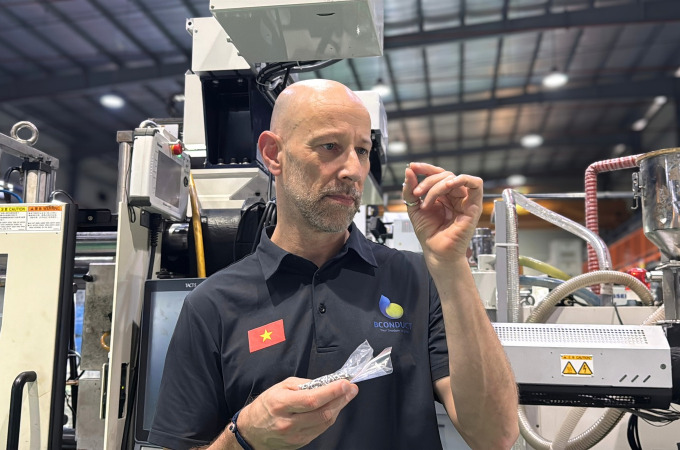
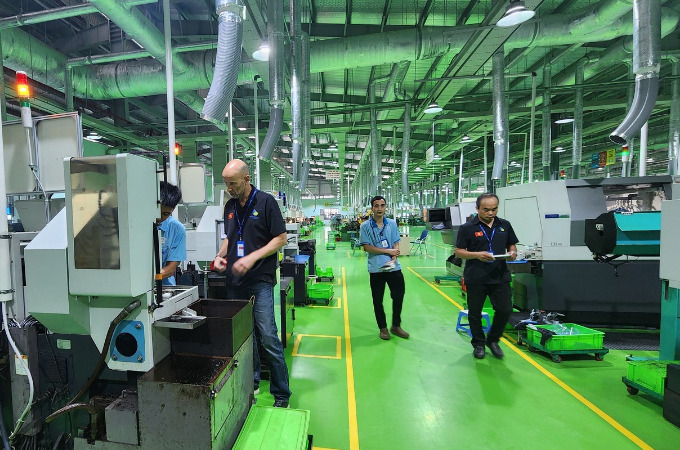
On-site involvement helps maintain communication between customer requirements and actual factory execution.
When process deviations or manufacturing challenges arise, Bconduct works with the supplier to coordinate corrective actions and verify their implementation.
Quality Verification
Quality control is integrated throughout the manufacturing process according to project requirements.
Depending on the component, inspection may cover incoming materials, cut dimensions, bend angles, critical features, welded assemblies, surface finishing, and final product conformity.
The focus is not simply on identifying defective components before shipment, but on maintaining process control and preventing recurring problems.
This combination of engineering oversight, supplier management, and on-the-ground quality verification helps customers reduce manufacturing risks while maintaining visibility over production.
Conclusion: Better Manufacturing Starts With Better Engineering Decisions
Sheet metal fabrication is not simply a sequence of cutting, bending, and assembly operations.
It is a manufacturing process in which early engineering decisions directly influence production cost, quality consistency, and delivery performance.
Material selection, part geometry, tolerances, and process selection must be considered together.
A design that performs well technically but is difficult to manufacture consistently can create unnecessary costs throughout the product lifecycle.
For international companies sourcing sheet metal components, the challenge is ensuring that engineering expectations remain aligned with supplier capabilities and actual production conditions.
The most effective way to control manufacturing cost and quality is to address potential problems before they become production problems.
Bconduct supports this approach through engineering coordination, qualified supplier selection, production monitoring, and on-site quality control.
Planning a sheet metal fabrication project?
Work with Bconduct to evaluate manufacturing requirements, identify suitable suppliers, and maintain control from engineering review to finished components.
Related posts
5 Critical CNC Machining Factors: Materials, Tolerances & Costs

Production Execution: Bringing Quality and Delivery Risks Under Control