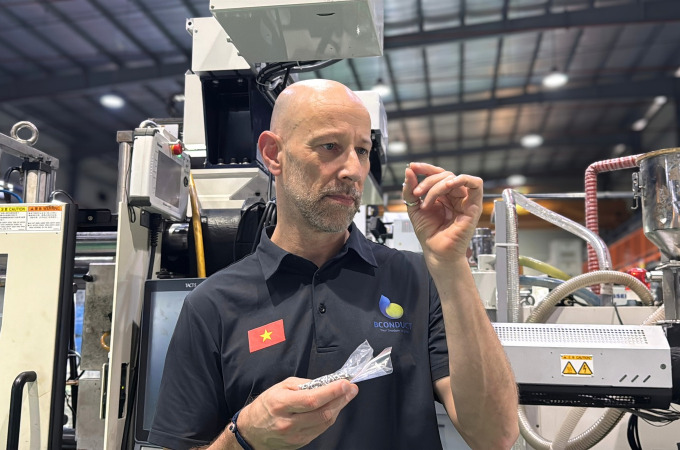
Production Execution: Bringing Quality and Delivery Risks Under Control

The Situation: A Production Schedule That Doesn’t Tell the Whole Story
An international industrial equipment manufacturer was working with an overseas supplier to produce a batch of precision-machined metal components.
The supplier had been selected, samples had been approved, and mass production was underway.
According to the production updates, everything was progressing as planned.
But the customer needed more than confirmation that manufacturing activities were taking place. They needed assurance that the parts being produced would actually meet the approved specifications and be ready for shipment on time.
As production progressed, several warning signs began to emerge:
-
Dimensional deviations were identified during in-process checks.
-
Corrective actions were discussed but not consistently followed through.
-
Production reports showed progress without providing sufficient evidence of actual quality performance.
-
The customer had limited visibility into how the factory was handling the issues.
The delivery schedule had not officially changed, but the risk of missing it was increasing.
The problem was no longer simply whether the supplier could manufacture the components. It was whether the production process was sufficiently controlled to deliver conforming products on time.
The Challenge: Closing the Gap Between Production Progress and Actual Results
Three issues required immediate attention.
1. Quality Deviations Were Not Being Addressed at Their Source
Dimensional inspection identified components outside the approved tolerance range.
However, identifying a nonconforming part was only the first step.
The underlying cause needed to be investigated. Was it related to machine settings, tool wear, inconsistent measurement practices, or a misunderstanding of the drawing requirements?
Without identifying the root cause, the factory risked continuing production under the same conditions.
2. Production Reporting Did Not Reflect Actual Manufacturing Conditions
The supplier’s progress reports focused primarily on completed quantities and planned delivery dates.
They provided limited information about rejected parts, rework, inspection findings, and outstanding corrective actions.
This created a gap between reported production progress and the customer’s ability to assess whether the order was actually progressing toward successful completion.
3. Delayed Decisions Increased the Risk of Delivery Disruption
Technical questions and quality issues required coordination between the customer and the factory.
When communication was delayed or responsibilities were unclear, corrective actions took longer to implement.
The longer these issues remained unresolved, the greater the risk of accumulating nonconforming parts, additional rework, and shipment delays.
The Bconduct Approach: Managing Execution on the Factory Floor
Bconduct became directly involved in monitoring production execution and coordinating the actions needed to bring the process back under control.
The focus was not simply to inspect the finished products. It was to identify problems early, establish clear accountability, and verify that corrective actions were effective.
1. Verify Actual Production Conditions
Bconduct reviewed the production status directly with the supplier and compared reported progress against actual manufacturing conditions.
This included checking:
-
Production quantities and completion status.
-
Current manufacturing activities and outstanding operations.
-
Inspection results and identified deviations.
-
Rework and rejected quantities.
-
Potential risks to the agreed delivery schedule.
This provided a more complete picture of production performance than schedule updates alone.
2. Investigate Quality Issues and Coordinate Corrective Actions
For the dimensional deviations, Bconduct coordinated with the supplier’s engineering and quality teams to investigate the underlying causes.
The review focused on the relevant drawing requirements, measurement methods, machine conditions, and production parameters.
Corrective actions were then defined with clear responsibilities and follow-up requirements.
The objective was to ensure that the factory did not simply sort out defective parts but addressed the conditions that allowed the deviations to occur.
3. Monitor Implementation at the Supplier Facility
Once corrective actions were agreed upon, Bconduct followed their implementation directly with the factory.
This involved checking whether revised production parameters were applied, whether inspection procedures were updated, and whether subsequent production results met the approved requirements.
The distinction is important: a corrective action is not complete simply because the supplier confirms that it has been implemented. Its effectiveness must be verified through actual production results.
4. Strengthen Quality Verification Before Shipment
As production continued, inspection activities were aligned with the critical product characteristics and customer acceptance requirements.
Bconduct coordinated the verification of:
-
Critical dimensions and tolerances.
-
Product conformity against approved drawings.
-
Consistency of production results.
-
Completion of required inspection records.
-
Final product condition before shipment.
This helped ensure that shipment decisions were based on verified product quality rather than production completion status alone.
5. Maintain Clear Production Communication
Throughout the process, Bconduct coordinated communication between the customer and supplier.
Production updates needed to communicate more than whether the order was on schedule.
They needed to explain what had been completed, what remained outstanding, which issues were identified, what corrective actions were underway, and whether any risks could affect delivery.
This gave the customer a clearer basis for making decisions before problems escalated.
The Outcome: Better Control Over Production and Delivery Risk
Through direct production monitoring, supplier coordination, and quality verification, the manufacturing process became more transparent and manageable.
The key improvements included:
Improved visibility: The customer gained a clearer understanding of actual production conditions, including quality findings and outstanding issues.
Stronger corrective action follow-up: Identified deviations were linked to specific actions, responsible parties, and verification requirements.
Better quality control: Inspection activities focused on preventing recurring problems rather than relying exclusively on final product sorting.
More informed delivery decisions: Production status and quality performance could be evaluated together, allowing potential delivery risks to be addressed earlier.
The central lesson was that production completion and successful delivery are not the same thing.
A manufacturing order is only truly on track when the required quantities are being produced consistently, quality requirements are being met, and outstanding risks are under control.
What This Case Demonstrates
Manufacturing problems rarely appear all at once.
They develop through small deviations, delayed communication, incomplete corrective actions, and gaps between what is reported and what is actually happening on the factory floor.
A supplier may have the equipment, workforce, and technical capability to manufacture a product. But maintaining consistent execution requires continuous coordination and verification.
This is where Bconduct makes a difference.
By combining engineering oversight, on-site production monitoring, supplier coordination, and quality control, Bconduct helps customers maintain control over manufacturing throughout the production cycle.
Production should not be judged by what the supplier reports. It should be judged by what the factory actually delivers.
Related posts
5 Critical CNC Machining Factors: Materials, Tolerances & Costs
Production Execution: Bringing Quality and Delivery Risks Under Control