Manufacturing Quality Improvement: Reducing Recurring Defects Through Process Control
The Situation: When Inspection Finds the Same Problems Again and Again
An international industrial equipment manufacturer was sourcing precision CNC-machined aluminum components from a manufacturing supplier in Vietnam.
The supplier had the necessary machining equipment, experienced operators, and an established inspection process. Initial samples had been approved, and regular production was underway.
However, the customer began experiencing recurring dimensional inconsistencies across production batches.
Some components passed inspection, while others required additional sorting or rework before shipment.
The supplier responded by increasing final inspection frequency. Although this helped identify nonconforming parts, the same deviations continued appearing in subsequent batches.
The problem was not a lack of inspection.
It was a manufacturing process that was not consistently producing the required results.
For the customer, this created uncertainty around product quality, delivery reliability, and the additional costs associated with repeated inspection and rework.
The Challenge: Why More Inspection Was Not Solving the Problem
A review of the manufacturing process highlighted three areas requiring attention.
1. Process Variations Were Not Being Addressed
The supplier’s inspection activities focused primarily on identifying defective components after machining.
However, variations in tool condition, machine adjustments, and operator practices were not being consistently monitored.
As a result, production conditions could change between inspection intervals without triggering timely corrective action.
2. Corrective Actions Focused on Individual Defects
When dimensional deviations were discovered, the factory typically separated nonconforming components and adjusted the machine before continuing production.
While these actions addressed immediate problems, they did not establish why similar deviations continued to occur.
Without systematic root cause analysis, the same manufacturing risks remained present.
3. Quality Information Was Not Fully Connected to Production Decisions
Inspection results were recorded, but the information was not consistently used to identify trends or adjust process controls.
Repeated deviations were treated as separate quality incidents rather than potential evidence of an unstable manufacturing process.
This limited the factory’s ability to prevent defects before they occurred.
The Bconduct Approach: Moving From Defect Detection to Process Improvement
Bconduct’s approach to manufacturing quality improvement focuses on identifying the conditions that cause recurring defects and establishing controls to prevent them.
Instead of simply increasing inspection activities, the objective is to improve the consistency of the manufacturing process itself.
1. Review Inspection Data and Identify Recurring Patterns
The first step is to evaluate available quality records and determine where deviations are occurring.
This includes reviewing dimensional inspection reports, rejected quantities, rework records, and production conditions associated with nonconforming components.
By comparing results across production batches, Bconduct can help suppliers distinguish isolated defects from recurring process-related problems.
This provides a more reliable basis for determining where corrective action is needed.
2. Investigate Root Causes on the Production Floor
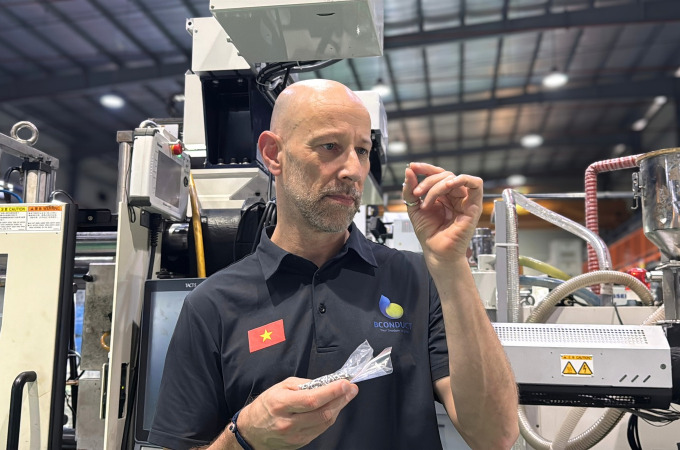
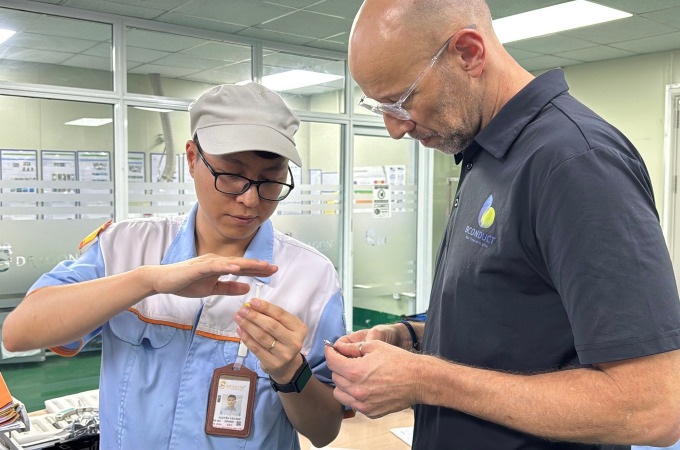
Bconduct works directly with supplier engineering and quality teams to investigate the factors contributing to recurring defects.
For precision-machined components, this may include reviewing:
-
Cutting tool condition and replacement practices.
-
Machine setup and process parameters.
-
Operator instructions and adjustment procedures.
-
Measurement methods and inspection equipment.
-
Drawing interpretation and critical tolerance requirements.
The objective is to identify the actual causes of process variation rather than making assumptions based only on the final inspection results.
3. Establish Corrective and Preventive Actions
Once the causes are understood, Bconduct coordinates with the supplier to define appropriate corrective and preventive actions.
Depending on the findings, these may include revising machine setup procedures, establishing tool replacement criteria, standardizing operator instructions, or adjusting in-process inspection requirements.
Responsibilities and implementation expectations are clarified with the relevant supplier personnel.
Importantly, corrective actions must be practical for the factory’s operating conditions and aligned with the customer’s technical requirements.
4. Strengthen In-Process Quality Control
Final inspection remains important, but it should not be the first opportunity to identify manufacturing problems.
Bconduct supports the implementation of inspection checkpoints at appropriate stages of production, particularly for critical product characteristics.
For example, dimensional checks may be performed after machine setup, following tool changes, or at defined production intervals.
These checkpoints help identify process deviations before large quantities of nonconforming components are produced.
5. Verify Improvement Through Production Results
Implementing a corrective action does not automatically mean that the problem has been resolved.
Bconduct follows up with suppliers to review subsequent inspection results, confirm adherence to revised procedures, and evaluate whether the same defects continue to occur.
When necessary, further adjustments are coordinated until the process demonstrates more consistent performance.
The goal is not simply to close a quality issue. It is to prevent the same issue from repeatedly affecting production.
The Outcome: Building a More Stable Manufacturing Process
A structured quality improvement approach creates benefits beyond the immediate correction of defective components.
Reduced recurring defects
Addressing the underlying causes of variation helps prevent the same quality problems from appearing across multiple production batches.
Lower rework and inspection costs
More stable production processes can reduce the need for repeated sorting, additional inspection, and corrective machining.
Improved production predictability
Consistent manufacturing conditions support more reliable production planning and reduce unexpected interruptions caused by quality problems.
Stronger supplier capabilities
Clear procedures, documented corrective actions, and consistent process monitoring help suppliers strengthen their manufacturing operations over time.
Greater customer confidence
Customers gain better visibility into how quality problems are investigated, corrected, and prevented, rather than receiving only final inspection results.
These are the intended operational improvements of the approach; actual results must be verified through production data.
What This Case Demonstrates: Quality Improvement Is a Continuous Process
Manufacturing quality improvement cannot rely exclusively on identifying and rejecting defective products.
Inspection tells manufacturers whether a component meets requirements at a particular point in time.
Process control helps ensure that those requirements can be met consistently throughout production.
The distinction becomes especially important when manufacturing volumes increase, multiple operators are involved, or production continues across different shifts.
A process that depends on constant correction and additional inspection may deliver acceptable parts, but it is not necessarily stable or scalable.
At Bconduct, quality improvement is approached as an ongoing collaboration between engineering, quality control, and supplier production teams.
Through on-site involvement, technical coordination, and continuous verification, Bconduct helps suppliers turn quality findings into practical manufacturing improvements.
Strengthening Manufacturing Quality With Bconduct
Reliable manufacturing requires more than capable equipment and final inspection.
It requires clearly defined requirements, controlled processes, effective corrective actions, and consistent verification throughout production.
Bconduct supports international manufacturers by working directly with suppliers to identify quality risks, improve manufacturing processes, and maintain alignment with customer specifications.
The objective is not to inspect more defective parts. It is to help suppliers produce fewer of them.
Whether you are facing recurring quality issues, inconsistent production results, or challenges maintaining supplier performance, Bconduct provides the local engineering and quality oversight needed to support continuous improvement.
Related posts
5 Critical CNC Machining Factors: Materials, Tolerances & Costs

Production Execution: Bringing Quality and Delivery Risks Under Control